Snowblower Tune-Up Checklist Before the First Storm
A snowblower spends most of the year forgotten in a corner of the garage, then is expected to start first time at 6 a.m. in a blizzard. An hour of attention in the fall makes that far more likely, and it catches worn parts while the shop still has time to fix them. This checklist covers gas two-stage and single-stage machines, with a shorter section for battery models.
Your operator manual sets the intervals, oil type, spark plug and adjustment specs for your model. Where this checklist and the manual differ, follow the manual.
Quick answer
Before the first snow: fresh fuel, fresh oil, a new or checked spark plug, spare shear pins, belts and cables inspected, scraper bar and skid shoes adjusted for your driveway, tires inflated, moving parts lubricated, and a test run outdoors. Then mark the edges of your driveway so you do not chew up gravel or turf.
Safety first
- Engine off, safety key removed and spark plug wire disconnected before you work near the auger, impeller or belts.
- Never reach into the chute or auger housing with hands or feet, even with the engine off. Use a clearing tool.
- Run the engine outdoors only, never in a closed garage.
- Handle fuel when the engine is cool, outdoors, away from ignition sources.
The pre-season checklist
| Task | Why it matters | Gas | Battery |
|---|---|---|---|
| Replace stale fuel, add stabilizer to fresh fuel | Old fuel is the top cause of no-starts | Yes | No |
| Change the oil | Clean oil of the right cold-weather grade protects the engine | Yes | No |
| Inspect or replace the spark plug | A worn plug makes cold starting harder | Yes | No |
| Check shear pins and carry spares | Pins protect the gearbox when the auger hits something | Two-stage | No |
| Inspect auger and drive belts | Cracked or glazed belts slip under load | Yes | Some models |
| Check auger, impeller and paddles | Damage or wear reduces throwing distance | Yes | Yes |
| Adjust scraper bar and skid shoes | Sets clearance for paved or gravel surfaces | Yes | Yes |
| Check control cables and engagement levers | Levers must engage fully and release instantly | Yes | Yes |
| Check tire pressure or tracks | Traction and even clearing | Yes | Yes |
| Lubricate per manual | Chute rotation, auger shaft and linkages move freely | Yes | Yes |
| Test electric start and lights | Find problems before you need them | If equipped | If equipped |
| Charge batteries | Cold reduces capacity | Electric start battery | Yes |
Step by step
1. Fuel
If the machine was stored with fuel, check its condition. Sour-smelling or darkened fuel should be drained into an approved container and taken to a household hazardous waste site. Refill with fresh fuel of the type in the manual, and add fuel stabilizer if it may sit for weeks between storms.
2. Oil
Check the level on flat ground and look at the color. Change it at the interval the manual recommends, using the grade it specifies for cold temperatures; oil that is too thick makes cold starts harder.
3. Spark plug
Remove the plug, inspect the tip, check the gap against the manual and replace it if it is fouled or worn. A new plug costs little and removes one variable on a cold morning.
4. Shear pins
On two-stage machines, the auger is fastened to its shaft with shear pins that break if the auger hits something solid. Check that they are intact, and keep several spares of the correct type with the machine. Never substitute ordinary bolts; they will not break when they should, and the gearbox can be damaged instead.
5. Belts
With the engine off and the spark plug wire disconnected, remove the belt cover and inspect the auger and drive belts for cracks, fraying, glazing or stretching. A slipping belt shows up as an auger that slows or stops in heavy snow. Belt adjustment and replacement are covered in most manuals; some owners prefer a shop for this job.
6. Auger, impeller and paddles
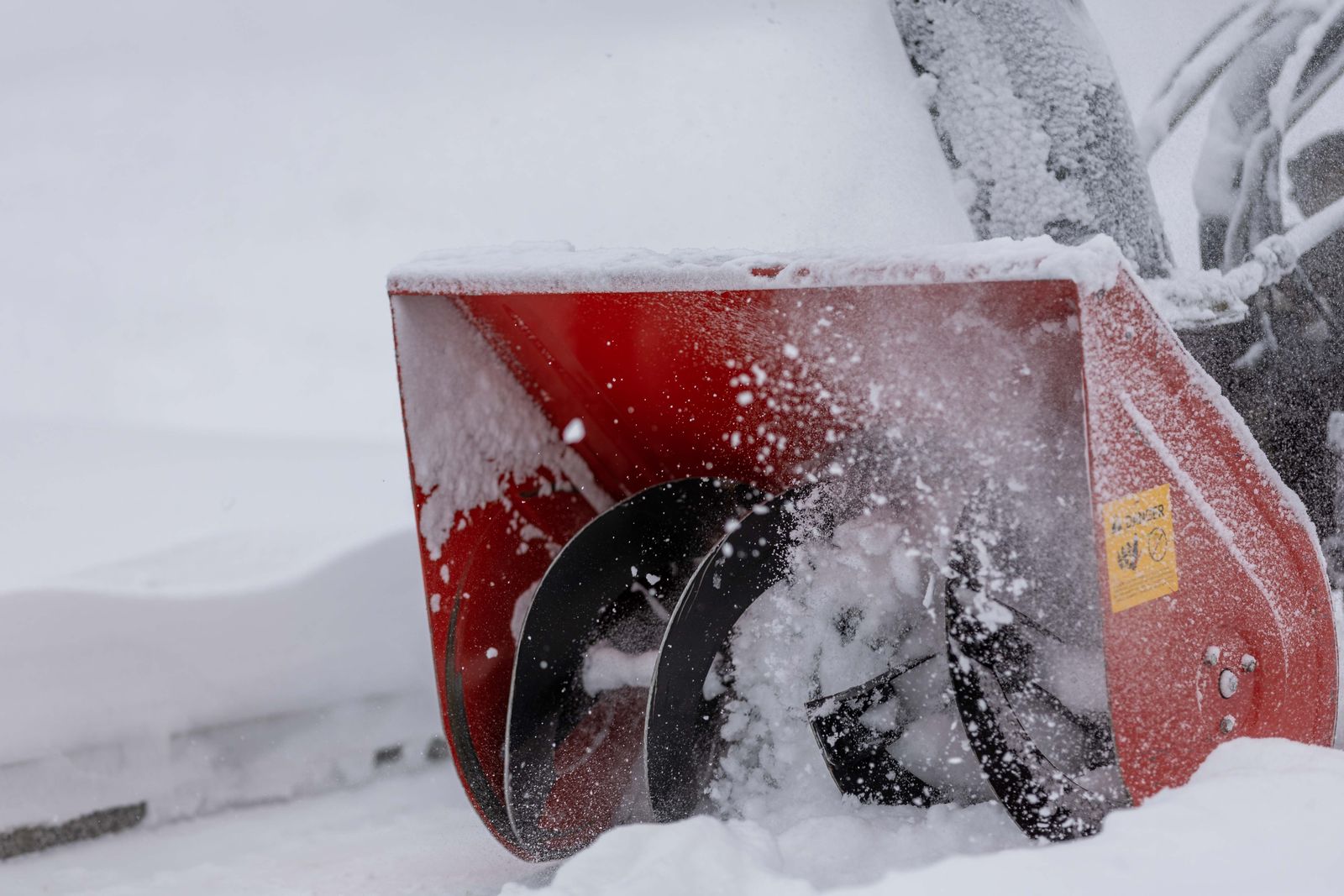
Look for bent auger flights, cracked impeller blades and, on single-stage machines, worn rubber paddles. Worn paddles throw snow weakly and can let the housing touch the pavement.
7. Scraper bar and skid shoes
The scraper bar runs along the bottom of the housing; the skid shoes on each side set how high the housing rides.
- Paved driveways: shoes are usually set so the scraper bar is close to the surface for a clean finish.
- Gravel driveways: raise the skid shoes so the housing rides above the stones. Two-stage machines are the usual choice here, because single-stage augers touch the ground and can pick up and throw gravel.
Replace a worn scraper bar or skid shoes before they wear into the housing.
8. Controls and cables
Squeeze and release the auger and drive engagement levers. They should engage fully and stop the auger and drive promptly when released. That release is a key safety feature. Stretched cables can be adjusted per the manual.
9. Tires, tracks and chute
Inflate tires to the pressure on the sidewall or in the manual. Check that the chute rotates and the deflector moves freely. Lubricate the points the manual lists; some owners also apply a silicone spray inside the chute to reduce sticking in wet snow.
10. Test run
Outdoors, start the machine using the normal routine, let it warm up and engage the auger and drive briefly. Listen for unusual noises and watch for vibration, which can indicate a damaged auger or impeller.
Before the first snow: prepare the driveway
- Mark the edges of the driveway, paths and any obstacles with stakes or reflectors before snow hides them.
- Clear away newspapers, door mats, extension cords, dog leashes and stones. They are the usual cause of broken shear pins and jammed chutes.
Battery snowblowers
- Charge batteries fully and store them indoors at the temperatures the manufacturer recommends.
- Inspect paddles and the scraper bar for wear.
- Check that the safety key, switch and battery latches work.
- Keep the battery contacts clean and dry.
After every storm
- Let the engine run for a minute or two with the auger engaged to clear remaining snow, then shut it off.
- Knock off snow and ice from the housing and chute with a tool, engine off.
- Let the machine dry before closing it in a cold, damp space, so controls and cables do not freeze.
- Top up fuel outdoors when the engine is cool.
When to call a shop
Take the machine in if you find no spark with a new plug, a carburetor that only runs on choke, gearbox noise, a bent auger shaft, or belts and cables you are not comfortable adjusting. Our guide to choosing a small engine repair shop explains what to ask, and booking in early fall avoids the winter rush.
If your machine refuses to start despite all this, work through our snowblower troubleshooting guide. Shopping for a new one? Read single-stage vs two-stage snow blowers first.
FAQ
How often should a snowblower be tuned up? At least once a year before the season, with the oil change and other intervals set by your manual.
Should I store a snowblower with fuel or run it dry? Manuals differ. Some recommend stabilized fuel and running the engine to circulate it, others recommend running the fuel system dry. Follow yours.
Can I use the same oil as my car? Only if it matches the type and grade in the snowblower manual. Small engines often specify particular grades for cold weather.
What if a shear pin breaks mid-storm? Shut the engine off, remove the key, wait for everything to stop, clear the obstruction with a tool and fit a spare pin of the correct type.