Single-Stage vs. Two-Stage Snow Blower: Which Do You Need?
Snow blowers are sold in stages, and the number tells you a lot about what the machine can handle. A single-stage blower is compact and quick for a paved driveway after a few inches of snow. A two-stage machine can chew through deep, wet snow and the frozen ridge the plow leaves at the end of the driveway. Picking the wrong one means either a machine that struggles every storm or one that is bigger, heavier and pricier than you need.
This guide explains how each type works and how to match one to your driveway, your climate and the person who will push it.
Quick answer
- Single-stage: best for paved driveways and walks, light to moderate snowfalls and smaller areas. Lighter, simpler and less expensive. Not for gravel.
- Two-stage: best for larger driveways, deeper or wetter snow, the plow ridge and gravel surfaces. Self-propelled, heavier, more capable and more maintenance.
- Three-stage: a two-stage design with an extra accelerator to feed snow faster; aimed at frequent, heavy snow and large areas.
If you regularly get storms deeper than your single-stage model’s rated intake height, or you have a gravel driveway, look at two-stage.
How they work
Single-stage
A single auger, usually with rubber or composite paddles, scoops the snow and throws it straight out the chute in one motion. The auger touches the ground, which helps scrape the surface clean and pulls the machine forward slightly. Most are not fully self-propelled.
Two-stage
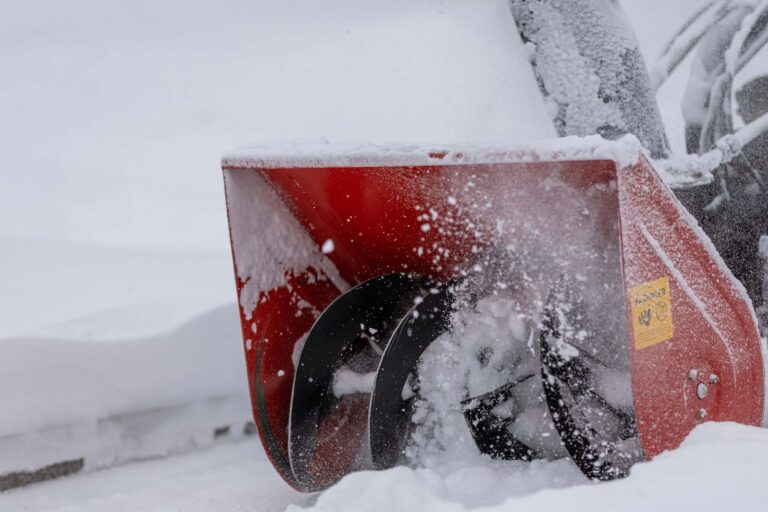
A serrated metal auger at the front breaks up the snow and feeds it to a fast-spinning impeller (the second stage), which throws it out of the chute. The housing rides on adjustable skid shoes, so the auger does not touch the surface. The machine is driven by wheels or tracks.
Three-stage
Adds an accelerator between the auger and impeller to move snow into the impeller faster. Manufacturers market them for heavy, wet snow and large areas; they are heavier and cost more than comparable two-stage machines.
Side-by-side comparison
| Single-stage | Two-stage | Three-stage | |
|---|---|---|---|
| Typical surfaces | Paved | Paved and gravel | Paved and gravel |
| Snow depth | Light to moderate | Moderate to deep | Deep and frequent |
| Plow ridge (packed, icy) | Struggles | Handles | Handles |
| Drive | Auger assist, pushed | Self-propelled wheels or tracks | Self-propelled |
| Throwing distance | Shorter | Longer | Longer |
| Weight and storage | Light, compact | Heavy, bulky | Heaviest |
| Maintenance | Simpler | Shear pins, belts, more parts | As two-stage, plus accelerator |
| Price | Lower | Higher | Highest |
The exact snow depths each machine handles depend on the model’s intake height and engine or motor; check the manufacturer’s specifications rather than relying on the label alone.
The questions that decide it
1. What is the driveway surface?
Gravel settles the question. Single-stage augers contact the ground and can pick up and throw stones, which is dangerous and damages the machine. A two-stage blower with skid shoes raised above the gravel is the usual choice.
2. How much snow do you get, and how wet is it?
Light, dry snow a few inches deep is single-stage territory. Regular deep storms, wet heavy snow and lake-effect or mountain snowfalls favor two-stage. Think about your typical storm, not the record one.
3. How big is the area?
Clearing width matters as much as power. Single-stage machines are typically narrower, which is fine for a single-car driveway and walks. Wider two-stage machines finish long or double driveways in fewer passes.
4. What does the plow leave behind?
The ridge at the end of the driveway is dense, chunky and often icy. Single-stage machines tend to bounce off it; two-stage machines are built for it.
5. Slopes and traction
Self-propelled two-stage machines handle slopes better. Tracked models grip steep or icy driveways well but are slower to maneuver.
6. Who will use it, and where will it live?
A two-stage machine can weigh several times as much as a single-stage model. Consider who will push, turn and store it, and measure your garage or shed space.
Gas, corded or battery?
- Gas: most two-stage and three-stage machines, and many single-stage. Most power and unlimited runtime with fuel, but need fuel care, oil changes and tune-ups.
- Corded electric: small single-stage throwers for decks, steps and short paths. Light and simple, limited by the cord.
- Battery: growing range of single-stage and some two-stage models. Quiet, no fuel or oil, but runtime depends on battery capacity, which drops in cold weather. Spare batteries add cost.
Features worth paying for
- Electric start on gas models, for reliable cold starts (plugs into a household outlet or uses a battery).
- Trigger or power steering on two-stage machines, which makes turning much easier.
- Remote chute control from the handle.
- Heated grips for long, cold sessions.
- Headlights if you clear before dawn.
- A clean-out tool mounted on the machine, so no one is tempted to use their hands.
Maintenance differences
Single-stage blowers need fuel care (or battery care), periodic paddle and scraper bar replacement and the usual engine servicing. Two-stage machines add shear pins, auger and drive belts, more lubrication points and skid shoes. Either way, our snowblower tune-up checklist covers what to do each fall, and the troubleshooting guide helps when one will not start.
Safety, whichever you choose
- Never clear a clogged chute or auger with your hands. Engine off, key out, wait for everything to stop, use the clearing tool.
- Clear the area of mats, newspapers, toys and hoses before you start.
- Point the chute away from people, cars, windows and the street.
- Run gas engines outdoors only.
FAQ
Can a single-stage blower handle the end-of-driveway plow pile? Usually only in small bites. If the ridge is heavy and icy where you live, a two-stage machine saves a lot of shoveling.
Is a three-stage worth it over a two-stage? For most homeowners a good two-stage machine is enough. Three-stage machines make more sense for large areas with frequent heavy snow.
Are battery snow blowers strong enough? Many handle typical residential storms well, especially single-stage models on paved driveways. Check runtime per battery and plan for cold-weather capacity loss.
What size two-stage should I get? Wider machines clear faster but are heavier and harder to store. Match the width to your driveway, your storage space and the person using it.