Small Engine Maintenance Schedule: A Checklist by Hours and Season
Small gas engines are forgiving machines, but they are not maintenance-free. Most of the failures that send mowers and snowblowers to the repair shop come from a short list of skipped jobs: old fuel, dirty air filters, low or old oil, worn spark plugs and dull blades or chains.
This guide pulls those jobs into one schedule you can follow for most outdoor power equipment. Your owner’s manual has the exact intervals and specifications for your engine, and it takes priority over any general guide.
Quick answer
- Before each use: check oil level (four-stroke), fuel, air filter condition, guards and blades or chains.
- Every few dozen hours or monthly in season: clean or service the air filter, sharpen blades or chains, clean cooling fins and decks.
- Every season or after a set number of hours: change the oil, replace the spark plug, inspect belts and cables.
- Before storage: deal with the fuel, clean the machine, and store it properly.
- Keep a log of dates and hours so you know what is due.
Find your engine’s numbers first
Locate the model and serial numbers on the engine and on the equipment itself, and download the manuals if you no longer have them. Our guide on how to find the right parts for your lawn mower shows where these numbers are usually stamped. The manual tells you:
- Oil type and capacity, and how often to change it.
- Air filter type and service interval.
- Spark plug type and gap.
- Fuel requirements, including maximum ethanol content and, for two-stroke engines, the fuel-to-oil mix ratio.
Before every use
- Oil level on four-stroke engines, with the machine level. Top up to the full mark with the specified oil.
- Fuel: fresh fuel, correctly mixed for two-stroke engines.
- Air filter: a quick look for heavy dirt or damage.
- Blades, chains and guards: sharp, undamaged and properly fitted.
- Loose parts: check for loose bolts, damaged handles and frayed cables.
- Leaks: fuel or oil under the machine.
A typical schedule
Use this table as a framework, then fill in your manual’s intervals. Hours refer to engine running time. Many machines have no hour meter, so estimate from how often and how long you use them, or fit an inexpensive hour meter.
| Task | Typical timing | Notes |
|---|---|---|
| Check oil level | Every use | Four-stroke engines |
| Change oil | After the break-in period on new engines, then as the manual states (often seasonally or by hours) | Change warm oil so it drains fully |
| Clean or replace air filter | Check often; service more often in dusty conditions | Foam elements are often washed and re-oiled; paper elements replaced |
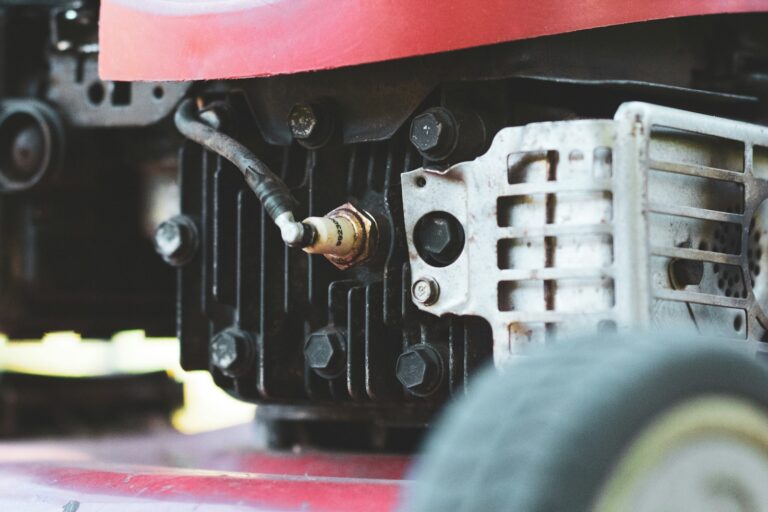
| Spark plug | Inspect and replace at the manual’s interval, often yearly | Use the correct type and gap |
| Blade sharpening (mowers) | Several times a season | More often in sandy soil or if you hit debris |
| Chain sharpening (chainsaws) | When cutting slows or produces dust instead of chips | Also check chain tension and bar oil every use |
| Clean cooling fins and shrouds | Regularly, especially after cutting dry grass | Overheating shortens engine life |
| Fuel filter (if fitted) | At the manual’s interval | Common on trimmers, blowers and chainsaws |
| Belts and cables | Inspect seasonally | Replace if cracked, glazed or frayed |
| Grease points | As specified | Common on riding mowers and snowblowers |
By season
Spring (mowers, trimmers, blowers)
- Install a fresh spark plug if due and check the air filter.
- Change the oil if you did not do it before storage.
- Sharpen and balance the mower blade. See how to sharpen lawn mower blades.
- Fill with fresh fuel and test-run before the first mow.
- Check tire pressure on riding mowers.
Summer
- Clean grass from decks, cooling fins and under guards after each use.
- Service the air filter more often in dry, dusty conditions.
- Resharpen blades mid-season.
Fall
- Prepare mowers and trimmers for storage: fuel treatment or draining, oil change, cleaning. Our guide on how to winterize a lawn mower covers the steps.
- Get snowblowers ready before the first storm: fresh fuel, oil, shear pins, belts, auger and scraper bar. See our snowblower tune-up checklist.
- Test generators under load as the manual recommends so they are ready for outages.
Winter
- Store warm-season equipment clean, dry and with fuel dealt with.
- Check snowblowers after each use: clear snow and ice, check shear pins and refuel only when the engine is cool.
Equipment-specific points
- Two-stroke tools (trimmers, blowers, many chainsaws): use the correct fuel-to-oil ratio and a quality two-stroke oil. Mix small batches so fuel stays fresh.
- Chainsaws: check chain tension, bar oil and the chain brake every use; sharpen the chain regularly. See how to sharpen a chainsaw chain.
- Snowblowers: keep spare shear pins of the correct type; never replace them with ordinary bolts.
- Generators: run them periodically under load, keep fuel stabilized, and never run them indoors or in a garage. See standby vs. portable generators.
- Pressure washers: protect the pump from freezing and follow the pump maintenance steps in the manual. See pressure washer PSI and GPM explained.
Fuel care
Stale fuel is the most common cause of hard starting after storage. Buy fuel in amounts you will use within about a month, use stabilizer for longer storage, and follow the manual on ethanol limits. Our guide to fuel stabilizer explains how it works and when to use it.
Safety while servicing
- Let the engine cool before working on it.
- Disconnect the spark plug wire before touching blades, augers or chains.
- Work outdoors or in a well-ventilated area, away from flames and sparks.
- Wear gloves when handling blades and chains.
- Dispose of used oil and old fuel at a recycling or hazardous waste facility.
Keep a simple log
A notebook or a note on your phone with the date, engine hours (or estimated hours) and what you did makes it easy to see what is due. It also helps when you sell the machine or take it in for repair.
When to get help
Some jobs, such as carburetor rebuilds, valve adjustments, recoil and electrical repairs, need tools and experience. If the engine still runs poorly after the basics, see choosing a small engine repair shop.
FAQ
How often should I change mower oil? Follow your manual. Many walk-behind mower manuals call for an oil change after the short break-in period on a new engine, then once a season or after a set number of hours, whichever comes first.
Do I need to replace the spark plug every year? Many owners replace it yearly because plugs are inexpensive and a fresh one helps reliable starting. Check the manual’s interval and inspect the old plug for clues about how the engine is running.
Can I clean a paper air filter? Tapping out loose dirt can help between services, but paper filters should be replaced when dirty or damaged. Do not wash them unless the manual says you can.